


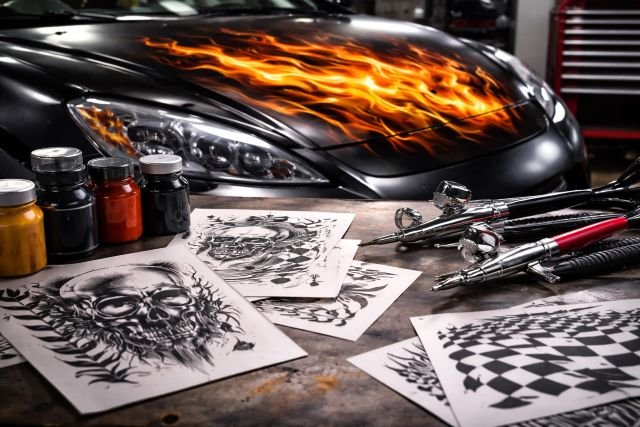
Custom vehicle graphics have become one of the most popular ways to personalize cars, motorcycles, trucks, and even helmets. From flames and tribal designs to intricate skull artwork, precision is critical in automotive paint jobs. This is where automotive airbrush stencils become essential tools for professional artists and DIY enthusiasts alike.
- What Are Automotive Airbrush Stencils?
- Why Automotive Airbrush Stencils Are Essential for Vehicle Graphics
- Types of Automotive Airbrush Stencils
- How Automotive Airbrush Stencils Work
- Popular Vehicle Graphics Created with Airbrush Stencils
- How to Choose the Best Automotive Airbrush Stencils
- Tips for Perfect Vehicle Graphics Using Airbrush Stencils
- DIY vs Professional Automotive Airbrush Graphics
- Frequently Asked Questions (FAQ)
- Conclusion
Automotive airbrush stencils allow painters to create highly detailed designs with consistent accuracy. Instead of freehand painting complex shapes, artists can use pre-cut templates to guide the airbrush, ensuring crisp lines and balanced patterns. Whether you’re designing racing stripes, skull graphics, flames, camouflage patterns, or logos, these stencils help deliver professional results quickly and efficiently.
In this comprehensive guide, you’ll learn how automotive airbrush stencils work, why they are essential for vehicle graphics, how to choose the right stencil, and tips for achieving flawless custom paint designs.
What Are Automotive Airbrush Stencils?
Automotive airbrush stencils are thin templates made from materials like mylar plastic, vinyl, or acetate. These templates contain pre-cut shapes that allow artists to spray paint through them using an airbrush tool.
When placed on a vehicle surface, the stencil blocks paint from certain areas while allowing it to pass through specific cutouts, creating clean and consistent patterns.
Common designs found in automotive stencil sets include:
More Read

- Flames and fire graphics
- Skulls and tribal art
- Camouflage patterns
- Lettering and numbers
- Mechanical or gear designs
- Lightning bolts and abstract textures
Professional custom paint artists frequently rely on stencils to speed up production while maintaining precision.
According to Auto Art Magazine, stencil-assisted airbrushing can reduce design time by nearly 40% compared to freehand painting, making it a popular technique in automotive customization.
Why Automotive Airbrush Stencils Are Essential for Vehicle Graphics
Vehicle graphics require extremely precise paint application. Even small mistakes can ruin an expensive paint job.
1. Consistent Design Accuracy
Using automotive airbrush stencils ensures the same design can be repeated multiple times without distortion. This is especially important for symmetrical graphics like flames running along both sides of a car.
2. Faster Custom Paint Jobs
Airbrush artists can complete detailed designs much faster with stencils. Instead of measuring and sketching every element, they simply position the stencil and spray.
This efficiency is valuable for professional auto body shops handling multiple customization projects.
3. Professional-Looking Results
Even beginners can achieve impressive artwork using stencils. The templates guide paint placement, helping create crisp edges and smooth gradients.
4. Creative Flexibility
Stencils can be layered to create depth and complex textures. Artists often combine multiple stencil patterns to create unique vehicle graphics.
For example, a painter might layer flame stencils with skull textures to produce a dramatic hot-rod design.
Types of Automotive Airbrush Stencils
Not all stencils are the same. Different designs and materials serve different purposes in automotive paint projects.
Mylar Airbrush Stencils
Mylar is one of the most popular materials used in automotive airbrush stencils. It is durable, flexible, and reusable.
Mylar stencils are ideal for:
- Flame graphics
- Texture patterns
- Repeated shapes
- Multi-layer paint designs
Because mylar is resistant to solvents and paint chemicals, it can be cleaned and reused many times.
Adhesive Vinyl Stencils
Adhesive stencils stick directly to the vehicle surface, preventing paint from bleeding underneath the stencil edges.
These are commonly used for:
- Lettering and logos
- Racing numbers
- Precise geometric graphics
Vinyl stencils are often single-use but provide extremely sharp edges.
Freehand Texture Stencils
These stencils are used to create organic textures rather than defined shapes.
Examples include:
- Smoke patterns
- Rust textures
- Carbon fiber effects
- Scale or reptile skin patterns
These designs are especially popular in motorcycle and helmet customization.
How Automotive Airbrush Stencils Work
Using automotive airbrush stencils is straightforward, but mastering the technique requires practice.
Step 1: Prepare the Surface
Before applying any stencil, the vehicle surface must be clean, dry, and properly primed. Dust or oil can cause paint defects.
Professional painters often use automotive degreasers and tack cloths to remove contaminants.
Step 2: Position the Stencil
The stencil is carefully placed on the vehicle panel. For curved surfaces like fenders or gas tanks, flexible stencils help maintain full contact with the surface.
Masking tape or temporary adhesive spray is sometimes used to keep the stencil in place.
Step 3: Apply Airbrush Paint
Using an airbrush gun, paint is sprayed lightly across the stencil openings.
Artists typically apply several thin layers instead of one heavy coat to prevent paint bleeding.
Step 4: Remove the Stencil
After the paint slightly dries, the stencil is removed carefully to reveal the design.
Additional layers or stencil patterns can be applied afterward to build complex graphics.
Popular Vehicle Graphics Created with Airbrush Stencils
Custom automotive artwork has evolved significantly in recent years. Many iconic designs rely on stencil techniques.
Flame Graphics
Flames are among the most classic automotive designs. Hot rods, muscle cars, and motorcycles often feature flame paint jobs.
Stencil sets allow painters to create realistic flame shapes with smooth gradients and highlights.
Skull and Gothic Designs
Motorcycle tanks frequently feature skull artwork created with layered stencil techniques. Artists use multiple stencils to create shading and depth.
Camouflage Patterns
Camouflage paint jobs are popular on off-road vehicles and trucks.
Stencil layering helps replicate realistic military camo textures.
Racing Stripes and Numbers
Many race cars use stencil templates to apply precise racing numbers and sponsor logos.
According to the Specialty Equipment Market Association (SEMA), the global automotive customization industry exceeds $52 billion annually, with vehicle graphics and paint customization playing a major role.
How to Choose the Best Automotive Airbrush Stencils
Selecting the right stencil set can make a huge difference in your paint results.
Consider the Material
Reusable mylar stencils are ideal for long-term use, while adhesive vinyl stencils work best for ultra-sharp edges.
Check the Flexibility
Vehicles have curved surfaces, so flexible stencils are easier to work with.
Look for Layered Stencil Sets
Advanced stencil kits include multiple layers designed to create depth and shadow effects.
Choose Designs That Match Your Project
For example:
- Flames for hot rods
- Camouflage for off-road trucks
- Tribal graphics for motorcycles
Professional stencil brands often design kits specifically for automotive paint.
Tips for Perfect Vehicle Graphics Using Airbrush Stencils
Even experienced artists follow certain techniques to achieve flawless results.
Use Light Paint Layers
Applying thin coats prevents paint bleeding under the stencil edges.
Maintain Proper Airbrush Distance
Holding the airbrush too close can cause overspray buildup. Most artists maintain a distance of 4–6 inches.
Secure the Stencil Properly
A stencil that shifts during painting can ruin the design.
Practice on Test Panels
Before working on a vehicle, painters often practice on scrap metal or plastic panels.
DIY vs Professional Automotive Airbrush Graphics
Many car enthusiasts attempt DIY vehicle graphics using stencil kits.
DIY Approach
Beginners can achieve impressive designs using basic airbrush kits and stencil templates.
However, large or complex graphics require experience.
Professional Custom Painters
Professional automotive artists combine stencils with freehand techniques to create unique masterpieces.
These custom paint jobs can cost anywhere from $1,000 to over $20,000, depending on complexity.
Frequently Asked Questions (FAQ)
What are automotive airbrush stencils used for?
Automotive airbrush stencils are used to create precise paint designs on vehicles such as cars, motorcycles, helmets, and trucks. They help produce consistent graphics like flames, skulls, camo patterns, and lettering.
Can beginners use airbrush stencils for car painting?
Yes. Stencils are ideal for beginners because they guide the paint application and make it easier to create professional-looking designs.
Are automotive airbrush stencils reusable?
Most mylar stencils are reusable and can be cleaned after each use. Vinyl adhesive stencils are usually single-use.
What paint works best with airbrush stencils?
Automotive-grade urethane paints and acrylic airbrush paints work best because they provide durability and smooth coverage.
Do professionals still use airbrush stencils?
Yes. Even highly skilled automotive artists use stencil templates to speed up workflow and maintain design consistency.
Conclusion
Custom vehicle graphics are one of the most exciting ways to transform a car or motorcycle into a personalized work of art. Whether you’re creating flames, skull designs, camouflage patterns, or racing graphics, automotive airbrush stencils provide the precision and consistency needed for professional-quality results.
These versatile tools simplify complex designs, reduce painting time, and allow artists to produce stunning automotive artwork with minimal effort. From beginner hobbyists to professional custom paint shops, airbrush stencils remain an essential part of modern vehicle graphics.