



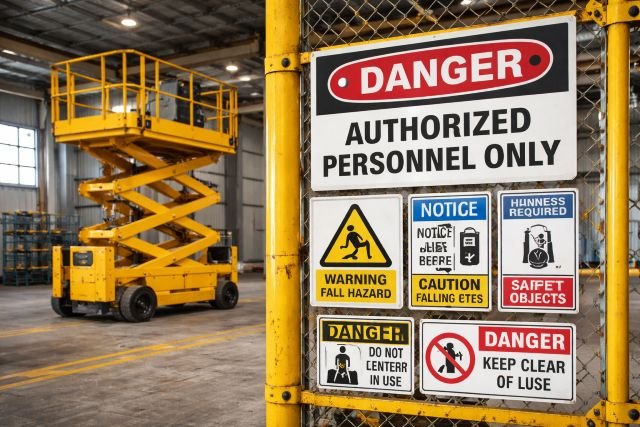
Lift safety signs play a crucial role in preventing workplace accidents and ensuring compliance with safety regulations. In industries such as construction, warehousing, manufacturing, and logistics, lifting equipment like forklifts, hoists, cranes, and elevators are used daily. Without proper signage, workers may overlook hazards, leading to injuries, equipment damage, or even fatalities.
- What Are Lift Safety Signs?
- Why Lift Safety Signs Are Essential for Workplace Safety
- OSHA Rules for Lift Safety Signs
- Types of Lift Safety Signs
- Where Lift Safety Signs Should Be Placed
- Best Practices for Using Lift Safety Signs
- Common Mistakes to Avoid
- Real-World Example: Warehouse Lift Safety
- FAQ: Lift Safety Signs
- Conclusion
According to the U.S. Bureau of Labor Statistics, thousands of workplace injuries each year involve lifting equipment or machinery. Clear and visible lift safety signs help communicate warnings, instructions, and operational guidelines that reduce these risks.
In this comprehensive guide, we’ll explore OSHA requirements for lift safety signage, the different types of safety signs used around lifting equipment, and the best practices for implementing them effectively in the workplace.
What Are Lift Safety Signs?
Lift safety signs are visual warning and information signs placed near lifting equipment to alert workers about hazards, safe operating procedures, and safety precautions.
These signs typically include:
- Hazard warnings
- Operational instructions
- Load capacity limits
- Personal protective equipment (PPE) requirements
- Restricted access warnings
Their primary goal is to reduce workplace accidents by ensuring that employees and visitors clearly understand potential dangers around lifting equipment.
More Read

OSHA (Occupational Safety and Health Administration) requires workplaces to communicate hazards effectively, and safety signage is one of the most widely used methods for doing so.
Why Lift Safety Signs Are Essential for Workplace Safety
Lifting equipment poses significant risks if used incorrectly. Workers may be exposed to falling loads, mechanical failures, crushing hazards, or collisions.
Properly placed lift safety signs help mitigate these risks by increasing hazard awareness.
Accident Prevention
Safety signs provide immediate visual warnings that help workers avoid dangerous actions. For example, a sign stating “Do Not Stand Under Suspended Load” reminds workers to keep clear of lifted materials.
Compliance with OSHA Regulations
OSHA requires employers to provide clear hazard communication in workplaces. Safety signage supports compliance with these regulations and helps avoid costly penalties.
Improved Operational Efficiency
When operators follow clear signage instructions, they are less likely to misuse equipment. This reduces downtime caused by accidents or equipment damage.
Worker Awareness and Training
Lift safety signs also reinforce training programs. Even experienced operators benefit from visible reminders of safety procedures.
OSHA Rules for Lift Safety Signs
OSHA has established standards regarding safety signs and hazard communication in workplaces.
Although OSHA does not have a single rule exclusively for lift safety signs, several regulations cover machinery safety and signage requirements.
OSHA Standard 1910.145: Safety Signs and Tags
This regulation outlines requirements for workplace safety signs, including:
- Standardized signal words such as Danger, Warning, and Caution
- Clear, easy-to-read messages
- Proper color coding
OSHA Standard for Material Handling Equipment
Lifting equipment such as forklifts and cranes must display capacity information and safety instructions.
For example, forklift load capacity must be clearly marked so operators know the maximum weight limits.
ANSI Safety Sign Standards
While OSHA references ANSI guidelines, the ANSI Z535 standard defines best practices for designing safety signs.
These include:
- Red for danger
- Orange for warning
- Yellow for caution
- Blue for mandatory instructions
Following ANSI standards helps ensure consistency across workplaces.
Types of Lift Safety Signs
Different types of lift safety signs are used depending on the hazard, equipment type, and workplace environment.
Warning Signs for Lift Hazards
Warning signs alert workers to potential dangers associated with lifting equipment.
Common examples include:
- Overhead load warnings
- Crush hazard warnings
- Moving machinery warnings
These signs typically use a yellow background with black text and symbols.
Load Capacity Signs
Load capacity signs inform operators about the maximum weight the lifting equipment can safely handle.
For example:
“Maximum Load Capacity: 2,000 lbs.”
Exceeding these limits can cause equipment failure or structural collapse.
Operational Instruction Signs
Operational instruction signs provide guidance on how to use lifting equipment safely.
Examples include:
- Proper lifting procedures
- Safe operating speeds
- Required inspection checks
These signs are especially useful near cranes, hoists, and hydraulic lifts.
PPE Requirement Signs
Some lifting environments require personal protective equipment.
Common PPE-related lift safety signs include:
- Hard hat required
- Safety boots required
- High visibility vest required
These signs are usually blue with white symbols or text.
Restricted Area Signs
Certain zones near lifting operations must remain restricted to authorized personnel only.
Signs such as:
“Authorized Personnel Only”
“Keep Clear of Lift Zone”
help prevent workers from entering dangerous areas.
Where Lift Safety Signs Should Be Placed
Proper placement is just as important as the signs themselves.
Lift safety signs should be positioned where workers can easily see them before encountering a hazard.
Near Lifting Equipment
Signs should be placed directly on or near the equipment, such as forklifts, cranes, hoists, and scissor lifts.
Entry Points to Lift Zones
Areas where lifting operations occur should have visible warnings at entry points.
This helps ensure workers are aware of potential hazards before entering.
Operator Stations
Operational instructions and load limits should be displayed near the equipment controls.
This allows operators to quickly verify safety information while working.
Overhead Hazard Areas
Signs warning about suspended loads should be placed in areas where overhead lifting occurs.
Best Practices for Using Lift Safety Signs
Simply installing lift safety signs is not enough. They must be implemented strategically to maximize effectiveness.
Use Clear, Simple Messaging
Signs should be easy to read and understand at a glance. Avoid overly complex wording.
Ensure High Visibility
Use large fonts, bright colors, and reflective materials if the workplace has low lighting.
Follow Standardized Symbols
International safety symbols improve understanding, especially in multilingual workplaces.
Conduct Regular Sign Inspections
Signs may fade, become damaged, or fall off over time. Regular inspections ensure they remain visible and legible.
Integrate Signs with Safety Training
Safety signage should support employee training programs rather than replace them.
Workers must understand the meaning behind the signs.
Common Mistakes to Avoid
Many workplaces install safety signs but fail to use them effectively.
Overloading Areas with Too Many Signs
Too many signs can overwhelm workers and reduce their impact.
Only place signage where it is necessary.
Poor Placement
If signs are hidden behind equipment or placed too high, workers may not notice them.
Outdated or Damaged Signs
Faded or outdated signs reduce credibility and may lead workers to ignore them.
Real-World Example: Warehouse Lift Safety
Consider a busy warehouse using forklifts and pallet lifts.
Without clear lift safety signs, workers walking through the warehouse may unknowingly enter forklift paths.
By installing:
- Forklift traffic warning signs
- Pedestrian crossing signs
- Load capacity signs
the warehouse significantly reduces collision risks.
Many warehouses have reported accident reductions after implementing improved safety signage.
FAQ: Lift Safety Signs
What are lift safety signs?
Lift safety signs are workplace signs that warn workers about hazards and provide instructions related to lifting equipment such as cranes, hoists, forklifts, and lifts.
Are lift safety signs required by OSHA?
Yes. OSHA requires workplaces to communicate hazards effectively. Safety signage helps meet OSHA safety communication standards.
Where should lift safety signs be placed?
They should be installed near lifting equipment, entry points to lifting zones, overhead hazard areas, and operator stations.
What colors are used in lift safety signs?
ANSI standards define colors for safety signs:
- Red for danger
- Orange for warning
- Yellow for caution
- Blue for mandatory actions
Conclusion
Lift safety signs are a critical part of workplace hazard communication and accident prevention. When used correctly, they help workers recognize dangers, follow safe operating procedures, and comply with OSHA regulations.
Organizations that implement clear, well-placed lift safety signs not only improve safety but also enhance operational efficiency and regulatory compliance. From warning signs and load capacity labels to PPE reminders and restricted area notices, effective signage plays a vital role in protecting workers around lifting equipment.