



Cycling is growing worldwide as more people choose bicycles for commuting, exercise, and eco-friendly transportation. However, as bike ownership increases, storage space becomes a major challenge — especially in urban homes, apartments, offices, and public spaces. This is where an automated bike rack becomes an innovative and efficient solution.
- What Is an Automated Bike Rack?
- Why Traditional Bike Storage Falls Short
- How an Automated Bike Rack Saves Space
- How Automated Bike Racks Protect Your Bicycle
- Smart Technology Behind Automated Bike Racks
- Real-World Examples of Automated Bike Rack Systems
- Who Benefits Most from Automated Bike Racks?
- Cost vs Value: Are Automated Bike Racks Worth It?
- Future of Bicycle Storage
- Frequently Asked Questions About Automated Bike Racks
- Conclusion
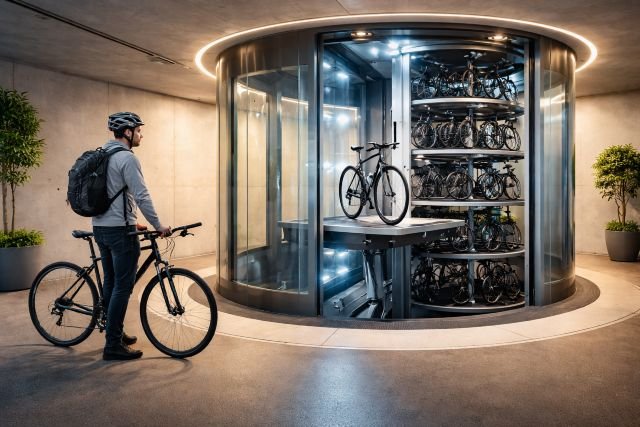
An automated bike rack is designed to store bicycles vertically or in compact mechanical systems that maximize space while ensuring safety and protection. Unlike traditional racks that require large floor areas, automated systems use technology to store multiple bicycles in a smaller footprint.
Beyond saving space, these racks protect bicycles from theft, weather exposure, and accidental damage. As cities move toward smart infrastructure and sustainable transportation, automated storage solutions are becoming a key part of modern bike parking systems.
What Is an Automated Bike Rack?
An automated bike rack is a smart bicycle storage system that uses mechanical or robotic technology to store and retrieve bikes automatically. These systems typically operate vertically or underground to maximize available space.
Unlike conventional racks where cyclists manually lock their bikes, automated racks use elevators, rotating platforms, or robotic arms to place bicycles into secure storage slots.
According to the International Transport Forum, improving bicycle parking infrastructure significantly increases cycling adoption in cities. Secure and convenient storage is one of the biggest factors influencing whether people choose to cycle for daily commuting.
More Read

Automated bike racks solve this challenge by offering efficient and secure storage while reducing clutter.
Why Traditional Bike Storage Falls Short
Traditional bike racks have been used for decades, but they often fail to meet the needs of modern urban environments.
Space Limitations
Conventional racks require large horizontal spaces, which can be difficult to allocate in crowded cities or small residential buildings.
For example, a typical floor rack stores bikes side-by-side, consuming valuable real estate in parking garages or sidewalks.
Higher Risk of Damage
When bikes are stored close together, handlebars, pedals, and frames can easily scratch or dent each other.
Security Concerns
Standard racks rely entirely on user locks. Poorly secured bikes can be vulnerable to theft or vandalism.
According to Bike Index, over 2 million bicycles are stolen annually in North America alone.
Secure automated storage systems significantly reduce these risks.
How an Automated Bike Rack Saves Space
One of the biggest advantages of an automated bike rack is its ability to dramatically increase storage capacity without increasing physical footprint.
Vertical Storage Efficiency
Many automated racks use vertical stacking mechanisms that allow bicycles to be stored above each other.
This design can increase storage capacity by up to 300% compared to traditional racks, according to urban mobility studies.
Instead of spreading bikes across a wide area, automated systems build upward, making them ideal for:
- Apartment buildings
- Offices
- Transit stations
- Universities
- Smart city infrastructure
Compact Robotic Systems
Some advanced automated bike parking systems use robotic technology similar to automated car parking garages.
Cyclists place their bike into a loading dock, and the system automatically moves it into a storage slot.
This eliminates the need for wide aisles or manual maneuvering.
Underground Bike Storage
In dense cities like Tokyo, automated underground bike racks are increasingly popular.
For example, the Eco Cycle system in Japan stores hundreds of bicycles underground while occupying only a small surface footprint.
These systems demonstrate how automation can solve space constraints in crowded environments.
How Automated Bike Racks Protect Your Bicycle
Beyond saving space, protection is another major benefit of automated storage systems.
Protection from Theft
Automated racks often require authentication methods such as:
- RFID cards
- Mobile apps
- QR codes
- Access tokens
This controlled access significantly reduces theft risk.
Since bicycles are stored inside a secured system rather than in public view, thieves have far fewer opportunities.
Protection from Weather
Outdoor bike storage exposes bicycles to rain, sun, snow, and humidity.
Over time, this can lead to rust, chain wear, and deterioration of components.
Automated racks typically store bicycles indoors or underground, shielding them from harsh environmental conditions.
Prevention of Physical Damage
When bikes are stacked neatly in dedicated slots, they do not rub against each other.
This prevents:
- Frame scratches
- Bent wheels
- Broken gears
- Handlebar damage
For cyclists who own expensive road bikes or e-bikes, this added protection is especially valuable.
Smart Technology Behind Automated Bike Racks
Modern automated bike racks are powered by advanced technologies that enhance convenience and efficiency.
Sensors and Automation
Sensors detect the presence of a bicycle and ensure correct placement before storage.
The system then automatically transports the bike to an available slot.
Digital Access Systems
Many racks integrate with smartphone apps, allowing users to reserve storage spaces or retrieve their bikes quickly.
Smart City Integration
Automated bike racks are increasingly integrated into smart transportation infrastructure.
Cities use them to encourage cycling and reduce car dependency.
According to the World Economic Forum, improving urban cycling infrastructure can significantly reduce congestion and carbon emissions.
Automated bike racks play a key role in supporting this transition.
Real-World Examples of Automated Bike Rack Systems
Tokyo Underground Bike Parking
Tokyo is known for its advanced automated bicycle storage.
Some systems store over 200 bicycles underground, retrieving them in less than 15 seconds.
This allows dense cities to manage large numbers of cyclists without cluttering streets.
European Smart Bike Parking
Cities in the Netherlands and Denmark — where cycling is extremely popular — have begun installing automated parking solutions at major train stations.
These systems support thousands of cyclists every day.
Commercial and Residential Installations
Automated racks are increasingly used in:
- Luxury apartment complexes
- Office buildings
- University campuses
- Airports
- Public transportation hubs
These facilities provide safe and convenient bike storage for commuters.
Who Benefits Most from Automated Bike Racks?
Automated bike racks offer advantages for several groups.
Urban Cyclists
Commuters gain secure storage close to workplaces and transit stations.
Property Developers
Residential and commercial buildings can maximize space while offering modern amenities.
City Governments
Municipalities can promote cycling without sacrificing valuable urban space.
Businesses
Companies that encourage employees to cycle can provide safe bike parking without large storage areas.
Cost vs Value: Are Automated Bike Racks Worth It?
The initial installation cost of an automated bike rack can be higher than traditional racks.
However, the long-term benefits often outweigh the investment.
These include:
- Higher storage capacity
- Reduced theft incidents
- Improved property value
- Better user experience
For large buildings and public infrastructure projects, automated bike parking can significantly improve space efficiency and sustainability.
Future of Bicycle Storage
As cities push toward sustainable transportation, the demand for smarter bike storage will continue to grow.
Emerging trends include:
- AI-powered bike parking systems
- Solar-powered automated racks
- Integration with bike-sharing programs
- Smart mobility platforms
Urban planners increasingly recognize that safe bicycle storage is essential for expanding cycling networks.
Automated bike racks will likely become a standard feature in future smart cities.
Frequently Asked Questions About Automated Bike Racks
What is an automated bike rack?
An automated bike rack is a smart storage system that automatically stores and retrieves bicycles using mechanical or robotic technology.
How much space can automated racks save?
Automated racks can increase storage capacity by up to three times compared to traditional bike racks, depending on the system design.
Are automated bike racks safe?
Yes. Most systems use secure authentication methods and store bikes inside enclosed structures, reducing theft risk.
Can automated racks store electric bikes?
Many modern systems are designed to handle e-bikes, though weight limits vary by manufacturer.
How fast can bikes be retrieved?
Advanced automated bike storage systems can return a bicycle in 10–20 seconds.
Conclusion
As cycling continues to grow worldwide, efficient bike storage solutions are becoming increasingly important. An automated bike rack offers a smart, space-saving alternative to traditional bike parking while providing superior protection against theft, weather damage, and accidental impacts.
By using vertical storage, robotics, and secure access systems, automated racks allow buildings, businesses, and cities to accommodate more bicycles in less space. This makes them ideal for urban environments where space is limited but cycling demand is high.
Whether installed in residential complexes, workplaces, or public transportation hubs, an automated bike rack improves convenience, safety, and sustainability for cyclists. As smart city infrastructure evolves, automated bicycle storage will play a crucial role in shaping the future of urban mobility.