



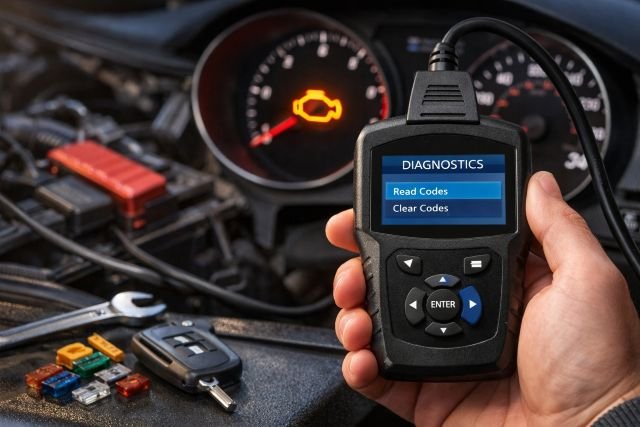
The check engine light reset process is something many drivers search for when the dashboard warning suddenly appears. That small illuminated icon can cause stress, but it does not always mean a serious problem. In many cases, the light indicates a minor issue that can be fixed or reset safely once the root cause is addressed.
- What the Check Engine Light Means
- When a Check Engine Light Reset Is Safe
- Method 1: Check Engine Light Reset Using an OBD-II Scanner
- Method 2: Disconnecting the Battery
- Method 3: Driving Cycle Reset
- Method 4: Tightening or Replacing the Gas Cap
- Common Causes Behind the Warning Light
- How to Prevent Future Check Engine Lights
- Example Scenario: A Simple Reset Fix
- When You Should NOT Reset the Warning Light
- Professional Diagnostics vs DIY Reset
- Frequently Asked Questions
- Conclusion: Understanding Check Engine Light Reset Safely
Modern vehicles use onboard diagnostics systems (OBD-II) to monitor engine performance and emissions. When a fault is detected, the system stores a diagnostic trouble code (DTC) and activates the check engine light. Understanding how to perform a check engine light reset safely can help drivers avoid unnecessary repair costs while ensuring their vehicle remains reliable.
What the Check Engine Light Means
The check engine light is part of a vehicle’s Onboard Diagnostics (OBD-II) system, which continuously monitors engine and emissions components. When the system detects an abnormal reading from sensors or engine components, it stores a fault code and activates the warning light.
According to the U.S. Environmental Protection Agency, OBD-II systems help reduce emissions by identifying engine faults early.
Common reasons the light may turn on include:
- Loose or faulty gas cap
- Oxygen sensor failure
- Catalytic converter problems
- Spark plug or ignition coil issues
- Mass airflow sensor malfunction
In many situations, the issue may be minor. However, ignoring the warning could lead to larger mechanical problems over time.
More Read

When a Check Engine Light Reset Is Safe
Before performing a check engine light reset, it is important to confirm that the underlying issue has been resolved.
A reset is typically safe when:
- The problem was temporary (such as a loose fuel cap).
- The faulty component has been replaced.
- The issue was triggered by a temporary sensor glitch.
If the warning light is flashing, the vehicle may be experiencing severe engine misfires that can damage the catalytic converter. In that case, the vehicle should be inspected immediately rather than attempting a reset.
Method 1: Check Engine Light Reset Using an OBD-II Scanner
One of the safest and most reliable methods is using an OBD-II scanner. This device reads and clears diagnostic trouble codes stored in the vehicle’s computer.
Steps to Reset the Light
- Locate the OBD-II port, usually under the dashboard near the driver’s seat.
- Plug in the scanner and turn the ignition to the “ON” position.
- Use the scanner to read the stored trouble codes.
- Fix the identified issue if necessary.
- Select the clear codes option on the scanner.
Once the codes are cleared, the vehicle’s system will reset the check engine light.
Many auto parts stores such as AutoZone provide free code scanning services, which can help drivers identify problems before resetting the light.
Method 2: Disconnecting the Battery
Another common check engine light reset method involves disconnecting the vehicle battery.
How It Works
Disconnecting the battery removes power from the engine control unit (ECU), which clears temporary fault codes stored in memory.
Steps
- Turn off the engine and remove the key.
- Open the hood and locate the battery.
- Disconnect the negative battery terminal.
- Wait approximately 10–15 minutes.
- Reconnect the terminal and start the vehicle.
This resets the vehicle computer and often clears the warning light.
However, keep in mind that this method may also reset other settings such as the radio, seat memory, and clock.
Method 3: Driving Cycle Reset
In some cases, the vehicle automatically clears the check engine light after several drive cycles if the problem no longer exists.
A typical drive cycle includes:
- Starting the engine
- Driving at varying speeds
- Allowing the engine to warm up
- Turning the vehicle off
If the issue is resolved, the system may reset itself after 20–40 successful drive cycles.
Method 4: Tightening or Replacing the Gas Cap
A surprisingly common reason for the warning light is a loose gas cap.
The fuel system must remain sealed to maintain proper pressure. If the gas cap is loose or damaged, the system detects a leak and triggers the warning light.
Quick Fix
- Turn off the engine.
- Remove the gas cap.
- Inspect it for cracks or damage.
- Tighten it until it clicks.
After a few drives, the system may automatically clear the warning if the seal is restored.
Common Causes Behind the Warning Light
Understanding why the light appears helps determine whether a check engine light reset is appropriate.
Faulty Oxygen Sensor
The oxygen sensor measures the amount of oxygen in exhaust gases. A failing sensor can reduce fuel efficiency and increase emissions.
According to CarMD’s Vehicle Health Index, oxygen sensor replacement is one of the most common repairs linked to check engine lights.
Catalytic Converter Issues
The catalytic converter reduces harmful exhaust emissions. When it fails, engine performance decreases and the vehicle may struggle to accelerate.
Mass Airflow Sensor Failure
The mass airflow sensor determines how much air enters the engine. If it malfunctions, the engine may run poorly or stall.
Ignition System Problems
Worn spark plugs or faulty ignition coils can cause misfires, which trigger the warning light.
How to Prevent Future Check Engine Lights
Preventive maintenance is the best strategy to avoid repeated warnings.
Regular Maintenance
Routine services such as oil changes, spark plug replacement, and air filter cleaning help maintain engine efficiency.
Use Quality Fuel
Low-quality fuel may cause carbon buildup and sensor issues.
Check the Gas Cap
Ensuring the fuel cap is properly tightened after refueling can prevent many warning lights.
Perform Periodic Diagnostics
Using an OBD-II scanner periodically allows drivers to monitor system health before problems escalate.
Example Scenario: A Simple Reset Fix
Imagine a driver notices the check engine light after refueling.
The car runs normally, but the warning remains illuminated. After inspection, the driver realizes the gas cap was not tightened fully.
By securing the cap and driving for several cycles, the system eventually clears the code and performs a check engine light reset automatically.
This scenario highlights how some issues are minor and easily resolved.
When You Should NOT Reset the Warning Light
Resetting the light without diagnosing the problem can mask serious engine issues.
Avoid resetting the light if:
- The light is flashing.
- The vehicle runs roughly or stalls.
- Fuel consumption suddenly increases.
- Strange noises occur from the engine.
In these cases, professional diagnostics are recommended.
Professional Diagnostics vs DIY Reset
Professional mechanics use advanced diagnostic tools to analyze stored codes and real-time engine data.
While a check engine light reset can clear the warning temporarily, a technician can determine the exact cause and prevent recurring problems.
According to automotive repair data, ignoring warning lights can increase repair costs significantly because minor issues may develop into major engine failures.
Frequently Asked Questions
Can I drive with the check engine light on?
Yes, if the light is steady and the vehicle runs normally. However, the problem should be diagnosed soon to prevent damage.
Will the check engine light reset itself?
Yes. If the issue is resolved, the vehicle computer may automatically clear the light after multiple drive cycles.
Does disconnecting the battery reset the check engine light?
Yes, removing the battery connection can clear stored codes. However, it should only be done after fixing the underlying problem.
Is it safe to reset the light without fixing the issue?
No. Clearing the code without repairing the fault may cause the warning to return and could hide serious engine damage.
Conclusion: Understanding Check Engine Light Reset Safely
A check engine light reset can be useful when the underlying issue has already been resolved or when a temporary sensor fault triggered the warning. Methods such as using an OBD-II scanner, disconnecting the battery, or completing drive cycles can safely clear the light.
However, the most important step is identifying the root cause before resetting the system. Ignoring engine diagnostics may lead to costly repairs and reduced vehicle performance.