



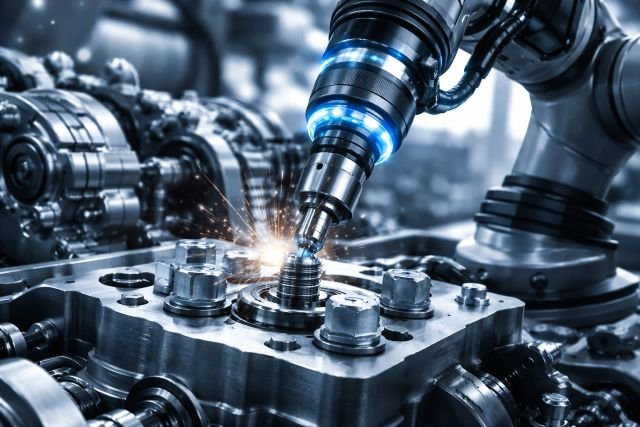
Modern industries depend heavily on speed, precision, and reliability. From automotive manufacturing to heavy construction equipment, even small improvements in mechanical fastening can lead to major gains in productivity. One innovation making a significant impact is automatic bolt technology, a system designed to automate the fastening and tightening of bolts in machinery and production lines.
- Understanding Automatic Bolt Technology
- Why Bolt Fastening Matters in Machinery Performance
- How Automatic Bolt Systems Improve Efficiency
- Integration of Automatic Bolt Technology in Industry 4.0
- Real-World Applications of Automatic Bolt Systems
- Smart Bolt Monitoring and Quality Control
- Challenges of Implementing Automatic Bolt Systems
- Future Trends in Automatic Bolt Technology
- Frequently Asked Questions About Automatic Bolt Technology
- Actionable Tips for Implementing Automatic Bolt Technology
- Conclusion
Within the first stages of industrial automation, fastening tasks were largely manual. Workers used handheld tools to secure bolts, which often resulted in inconsistent torque, slower assembly times, and higher labor costs. Today, automatic bolt systems eliminate many of these inefficiencies by delivering precise, repeatable fastening with minimal human intervention.
This article explores how automatic bolt technology works, why it is transforming modern machinery, and how manufacturers can leverage it to improve operational efficiency, reduce downtime, and enhance safety.
Understanding Automatic Bolt Technology
Automatic bolt technology refers to automated systems designed to feed, position, tighten, and verify bolts without manual input. These systems are often integrated into robotic assembly lines or automated machinery.
Instead of workers manually placing bolts and tightening them with tools, automated bolt systems use specialized equipment such as:
- Automatic bolt feeders
- Robotic fastening arms
- Torque-controlled tightening tools
- Vision-guided positioning systems
Together, these components ensure that bolts are installed accurately and consistently.
More Read

In many modern factories, automated bolt fastening systems are now part of Industry 4.0 environments, where machines communicate with sensors and software to monitor production quality in real time.
According to the International Federation of Robotics (IFR), global industrial robot installations surpassed 553,000 units in 2022, demonstrating the growing reliance on automation technologies in manufacturing.
Automatic bolt solutions are a crucial part of this automation movement.
Why Bolt Fastening Matters in Machinery Performance
Bolts may appear to be minor components, but they play a critical role in machinery reliability.
Improper fastening can cause:
- Structural instability
- Machine vibration
- Premature component wear
- Safety hazards
- Equipment failure
For industries such as aerospace, automotive, and heavy equipment manufacturing, even slight inconsistencies in bolt torque can lead to costly recalls or catastrophic failures.
Automated fastening systems ensure every bolt meets strict specifications, dramatically reducing these risks.
How Automatic Bolt Systems Improve Efficiency
Faster Assembly Processes
One of the biggest advantages of automatic bolt technology is speed.
Manual fastening requires multiple steps: positioning the bolt, aligning tools, applying torque, and verifying tightness. Each step introduces delays and potential errors.
Automatic bolt systems perform these tasks in seconds with consistent accuracy.
For example, in automotive assembly plants, robotic fastening systems can tighten dozens of bolts per minute, significantly reducing production cycle times.
Companies implementing automated fastening technologies often report production speed improvements of 30–50%.
Improved Precision and Consistency
Human workers can apply different levels of torque when tightening bolts, especially during long shifts or repetitive tasks.
Automatic bolt systems use torque sensors and programmable controllers to ensure each bolt is tightened exactly to specification.
This consistency offers several advantages:
- Improved product quality
- Reduced defects
- Lower warranty claims
- Increased structural reliability
Many systems also include torque verification and data logging, which allows manufacturers to track fastening accuracy across production batches.
Reduced Labor Costs
Labor-intensive assembly tasks are one of the largest operational expenses for manufacturers.
Automatic bolt machines reduce the need for manual fastening labor while allowing workers to focus on higher-value tasks such as quality control and system supervision.
According to Deloitte’s manufacturing automation report, companies adopting automation technologies can reduce operational costs by up to 20–30% over time.
While automation requires an initial investment, the long-term return often outweighs the upfront cost.
Enhanced Workplace Safety
Manual bolt fastening often involves repetitive movements, awkward positions, and heavy tools.
These tasks increase the risk of workplace injuries such as:
- Repetitive strain injuries (RSI)
- Wrist and shoulder stress
- Accidental tool slips
- Fatigue-related errors
By replacing manual fastening with automated systems, companies can significantly improve worker safety.
Robotic bolt systems also reduce exposure to dangerous environments, such as high-temperature manufacturing zones or hazardous chemical facilities.
Integration of Automatic Bolt Technology in Industry 4.0
Industry 4.0 focuses on smart factories where machines, sensors, and software work together.
Automatic bolt systems are increasingly integrated with:
- Industrial IoT sensors
- Predictive maintenance platforms
- Real-time production analytics
- AI-driven quality control
These integrations allow manufacturers to monitor fastening performance and detect problems before they affect production.
For instance, torque sensors can detect abnormal resistance during bolt tightening, indicating possible component defects or misalignment.
Early detection helps prevent machinery breakdowns and costly downtime.
Real-World Applications of Automatic Bolt Systems
Automotive Manufacturing
Automotive production lines rely heavily on automated fastening.
A single vehicle may contain over 3,000 bolts, making manual fastening inefficient.
Automatic bolt systems ensure every bolt meets strict torque standards, particularly for safety-critical components such as:
- Engine assemblies
- Suspension systems
- Brake components
Companies like Tesla and Toyota use robotic fastening technologies to maintain consistent quality and high production speeds.
Aerospace Engineering
In aerospace manufacturing, precision is critical.
Aircraft structures must withstand extreme pressure, temperature, and vibration conditions. Even minor fastening inconsistencies can compromise safety.
Automated bolt systems help aerospace manufacturers achieve micron-level precision when securing structural components.
Organizations such as NASA and Boeing use automated fastening tools to ensure reliability in spacecraft and aircraft assembly.
Heavy Equipment Manufacturing
Construction machinery such as excavators, bulldozers, and cranes contain large structural bolts that must be tightened precisely.
Automatic bolt tools reduce assembly time while ensuring these heavy-duty bolts meet torque specifications required for extreme operating conditions.
Manufacturers of heavy equipment increasingly adopt robotic fastening to improve both durability and production efficiency.
Smart Bolt Monitoring and Quality Control
Advanced automatic bolt technology now includes smart monitoring features.
These systems track critical fastening parameters such as:
- Torque
- Angle of rotation
- Tightening speed
- Thread resistance
The data collected helps engineers identify patterns that might indicate production problems.
For example, if torque readings suddenly change across multiple units, the system can alert operators to potential component defects or tool wear.
This real-time monitoring improves quality assurance and supports predictive maintenance strategies.
Challenges of Implementing Automatic Bolt Systems
Despite its advantages, adopting automated fastening technology comes with challenges.
The initial investment for robotic fastening systems can be high, especially for small manufacturers.
Integration with existing machinery may also require engineering modifications and software adjustments.
However, many manufacturers overcome these barriers by implementing automation gradually, starting with high-impact production areas.
Over time, the productivity gains and cost savings justify the investment.
Future Trends in Automatic Bolt Technology
The future of automatic bolt systems is closely tied to advances in robotics and artificial intelligence.
Several emerging trends are shaping the next generation of automated fastening solutions.
AI-powered robots are becoming capable of adjusting torque parameters dynamically based on material properties.
Machine vision systems are improving bolt alignment accuracy, reducing installation errors.
Collaborative robots, also known as cobots, are allowing humans and automated fastening tools to work safely together on assembly lines.
Additionally, digital twin technology enables engineers to simulate bolt fastening processes before implementing them in real production environments.
These innovations will continue to enhance machinery efficiency across industries.
Frequently Asked Questions About Automatic Bolt Technology
What is automatic bolt technology?
Automatic bolt technology refers to automated systems that feed, position, and tighten bolts using robotic tools and sensors to ensure consistent torque and fastening accuracy.
How does automatic bolt fastening improve productivity?
Automated bolt systems reduce assembly time, eliminate manual errors, and allow machines to install bolts quickly and consistently, improving overall manufacturing efficiency.
Which industries use automatic bolt systems?
Industries that rely heavily on automated fastening include automotive manufacturing, aerospace engineering, electronics assembly, heavy equipment production, and industrial machinery.
Is automatic bolt technology expensive?
While the initial investment can be high, companies often recover costs through increased productivity, lower labor expenses, and reduced defects.
Actionable Tips for Implementing Automatic Bolt Technology
Manufacturers considering automated fastening should start by analyzing production bottlenecks.
Identify assembly stages where manual bolt fastening slows production or introduces errors.
Next, evaluate robotic fastening systems that can integrate with existing equipment.
Training staff to operate and maintain automated bolt systems is equally important for long-term success.
Finally, implementing torque monitoring and data analytics can maximize the benefits of automation.
Conclusion
As industries continue moving toward smart manufacturing, automatic bolt technology is becoming a key component of efficient machinery design and production.
By automating bolt fastening, manufacturers can achieve faster assembly speeds, greater precision, improved worker safety, and lower operational costs.
From automotive plants to aerospace facilities, automated bolt systems are helping organizations maintain consistent quality while meeting increasing production demands.
Companies that adopt automatic bolt solutions today position themselves for greater competitiveness in an increasingly automated industrial landscape.