



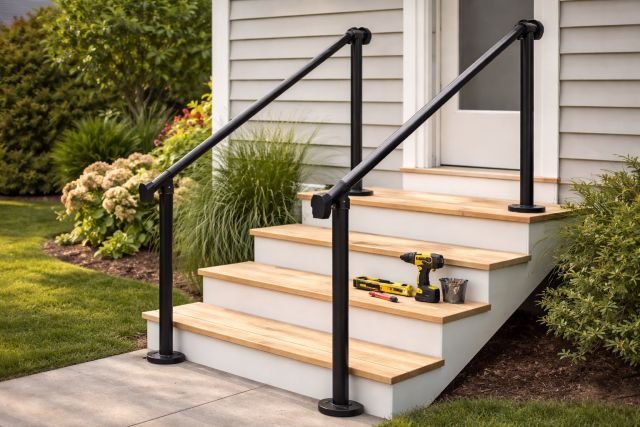
Installing a safe and attractive stair railing used to require custom carpentry, specialized tools, and hours of labor. Today, handrail kit stairs offer a much easier alternative. These ready-to-install systems allow homeowners, builders, and DIY enthusiasts to upgrade or install stair railings quickly and affordably.
- What Are Handrail Kit Stairs?
- Why Homeowners Choose Handrail Kit Stairs
- Types of Handrail Kit Stair
- How to Choose the Best Handrail Kit Stairs
- Step-by-Step Overview: Installing Handrail Kit Stairs
- Real-Life Example: A DIY Basement Stair Upgrade
- Maintenance Tips for Stair Handrail Kits
- Common Questions About Handrail Kit Stairs
- The Future of Stair Installation
- Conclusion
Whether you are renovating your home, finishing a basement, or adding outdoor steps to a deck, handrail kit stairs provide a practical solution that combines safety, style, and convenience. Instead of measuring every component individually and sourcing separate parts, a handrail kit includes everything needed for a streamlined installation.
In this guide, you’ll learn how stair handrail kits work, their advantages, how to choose the right one, and why they have become one of the most popular options for modern stair installations.
What Are Handrail Kit Stairs?
Handrail kit stairs refer to pre-packaged railing systems designed specifically for staircases. These kits typically include pre-measured rails, brackets, connectors, mounting hardware, and installation instructions.
The goal of a stair handrail kit is to simplify what traditionally required skilled carpentry. Instead of building a railing piece by piece, users assemble the components according to the provided layout.
Most stair railing kits are designed for common stair angles and heights, which makes them suitable for:

- Interior residential stairs
- Basement staircases
- Outdoor deck stairs
- Porch and entryway steps
- Garage access stairs
Because the components are pre-engineered, installation becomes faster and far less complicated than traditional custom railings.
According to the U.S. Consumer Product Safety Commission, more than one million stair-related injuries occur every year in the United States, highlighting the importance of proper handrails and stair safety.
Handrails play a crucial role in reducing these risks.
Why Homeowners Choose Handrail Kit Stairs
The growing popularity of handrail kit stairs comes from their ability to solve multiple challenges at once. They offer a balance between affordability, simplicity, and modern design.
Easy Installation
One of the biggest advantages of handrail kits is how easy they are to install. Most kits are designed for DIY installation with basic tools such as a drill, level, and measuring tape.
Pre-cut parts and pre-drilled holes eliminate much of the guesswork involved in traditional railing construction.
This means homeowners can often complete a stair railing installation in a few hours instead of hiring a professional contractor.
Cost Savings
Custom stair railings can cost hundreds or even thousands of dollars depending on the material and complexity. In comparison, handrail kits are significantly more affordable.
The savings come from standardized manufacturing and simplified assembly. Instead of paying for custom fabrication, buyers receive ready-to-install components.
For many homeowners renovating on a budget, this cost advantage makes handrail kit stairs a highly attractive option.
Improved Safety
Handrails are not just decorative elements. They are essential safety features that help prevent falls and provide support while using stairs.
A properly installed stair railing:
- Helps maintain balance
- Reduces fall risk
- Provides support for elderly individuals
- Improves accessibility
Building codes in many regions actually require handrails for staircases with four or more steps. Organizations such as the International Code Council (ICC) publish safety guidelines that builders must follow.
Handrail kits are often designed with these codes in mind.
Modern Design Options
Another major benefit of stair handrail kits is the wide variety of design options available today.
Homeowners can choose from materials like:
- Powder-coated steel
- Aluminum
- Wood
- Stainless steel
- Cable railing systems
These styles allow the railing to match modern, traditional, industrial, or minimalist home designs.
Types of Handrail Kit Stair
Not all handrail kits are the same. Different styles and materials suit different environments and aesthetic preferences.
Interior Stair Handrail Kits
Interior handrail kits are designed for indoor staircases and typically prioritize aesthetics alongside functionality.
Popular styles include wooden handrails, metal balusters, and minimalist cable railings. These systems integrate well with contemporary home interiors.
They are commonly used for:
- Living room stairs
- Basement staircases
- Loft access stairs
- Split-level homes
Interior kits often focus on decorative appeal as much as safety.
Outdoor Stair Handrail Kits
Outdoor stairs require railings that can withstand weather exposure. As a result, outdoor handrail kits typically use corrosion-resistant materials such as aluminum or galvanized steel.
These railings are commonly installed on:
- Deck stairs
- Porch steps
- Garden stairs
- Garage entry steps
Powder-coated finishes help prevent rust and ensure durability.
Wall-Mounted Handrail Kits
Wall-mounted kits attach directly to the wall instead of using vertical posts. This type is ideal for narrow staircases or spaces where traditional railings would take up too much room.
They are frequently used in:
- Basements
- Small homes
- Apartment buildings
- Commercial stairways
These handrails provide support without altering the structure of the staircase.
Modular Stair Railing Kits
Modular kits allow users to adjust the railing length or configuration. Sections can often be combined or trimmed to fit specific stair layouts.
This flexibility makes modular handrail kit stairs ideal for renovation projects where stair dimensions may vary.
How to Choose the Best Handrail Kit Stairs
Selecting the right stair railing kit depends on several factors including design preferences, installation requirements, and safety standards.
Measure Your Staircase Carefully
Accurate measurements are essential before purchasing a handrail kit.
Important dimensions include:
- Stair angle
- Step height and depth
- Total stair length
- Mounting locations
Most manufacturers provide sizing guides to help determine the correct kit.
Check Local Building Codes
Before installing a stair railing, it’s important to verify local building codes.
Common requirements include:
- Minimum handrail height
- Spacing between balusters
- Required railing strength
- Proper mounting techniques
The International Residential Code (IRC) generally recommends handrails between 34 and 38 inches above stair nosings.
Following these guidelines ensures both safety and compliance.
Choose Durable Materials
The right material depends largely on the installation environment.
Indoor railings may prioritize appearance, while outdoor railings must withstand moisture, sunlight, and temperature changes.
Durable materials include:
- Powder-coated aluminum
- Stainless steel
- Treated wood
High-quality materials help ensure that the handrail system remains safe and stable for years.
Consider Design and Style
Stair railings contribute significantly to the overall look of a home.
Modern homes often feature minimalist metal or cable railings, while traditional homes may use wooden handrails and decorative balusters.
Choosing a style that complements the home’s architecture helps create a cohesive design.
Step-by-Step Overview: Installing Handrail Kit Stairs
Although specific instructions vary by manufacturer, the general process for installing handrail kit stairs follows a similar structure.
Step 1: Mark the Handrail Height
Use a measuring tape and level to mark the correct railing height along the staircase.
This ensures consistent alignment across all mounting points.
Step 2: Install Mounting Brackets
Secure the mounting brackets to either the wall or stair posts according to the kit instructions.
Brackets must be firmly anchored into structural supports such as wall studs or stair posts.
Step 3: Attach the Handrail
Once the brackets are installed, the handrail is attached using screws or connectors provided in the kit.
Many modern kits include adjustable connectors that accommodate stair angles.
Step 4: Secure All Components
After assembling the railing system, check that every component is tightly secured.
A stable handrail should not wobble or shift when pressure is applied.
Step 5: Inspect for Safety
Before using the stairs regularly, verify that the railing meets all safety guidelines and building code requirements.
Real-Life Example: A DIY Basement Stair Upgrade
Consider a homeowner finishing a basement renovation. The staircase connecting the basement to the main floor lacks a proper handrail.
Instead of hiring a contractor, the homeowner installs a handrail kit stairs system purchased online.
The installation process takes roughly three hours using basic tools. The result is a sleek powder-coated metal railing that improves both safety and aesthetics.
The cost of the project is under $200 — far less than a custom railing installation.
This example illustrates why stair railing kits are increasingly popular among DIY homeowners.
Maintenance Tips for Stair Handrail Kits
Even though most handrail kits are designed for durability, regular maintenance helps ensure long-term safety.
Wooden railings may require periodic sealing or repainting. Metal railings should be inspected occasionally for loose screws or mounting brackets.
Outdoor railings should also be cleaned regularly to remove dirt, moisture, and debris.
Proper maintenance extends the life of the railing and keeps it looking new.
Common Questions About Handrail Kit Stairs
Are handrail kits safe for residential stairs?
Yes. When installed correctly and according to building codes, handrail kit stairs provide reliable support and safety for residential staircases.
Can beginners install stair railing kits?
Most stair handrail kits are specifically designed for DIY installation. Clear instructions and pre-measured parts make the process manageable for beginners.
How much do handrail kits cost?
Prices vary depending on material and design. Basic wall-mounted kits may cost around $50–$150, while premium modular systems can range from $200–$600 or more.
Do stair railing kits meet building codes?
Many manufacturers design kits to comply with common building standards such as those defined by the International Residential Code (IRC). Always verify compliance with local regulations.
The Future of Stair Installation
As home improvement trends continue to evolve, homeowners increasingly favor products that combine convenience, safety, and modern design.
Handrail kit stairs represent this shift perfectly. They eliminate the complexity of traditional railing construction while maintaining high safety standards.
Advances in modular design, durable materials, and modern aesthetics are making these systems even more versatile.
For homeowners seeking a practical way to improve stair safety without expensive custom carpentry, handrail kits are quickly becoming the go-to solution.
Conclusion
Installing stair railings no longer requires advanced carpentry skills or expensive custom fabrication. Handrail kit stairs provide a simple, affordable, and reliable solution for both indoor and outdoor staircases.
With pre-measured components, easy installation, and a variety of modern design options, these kits allow homeowners to upgrade stair safety quickly and efficiently.
Whether you are renovating a basement, building a deck, or improving accessibility in your home, handrail kit stairs offer a smart solution that combines convenience, durability, and style.