



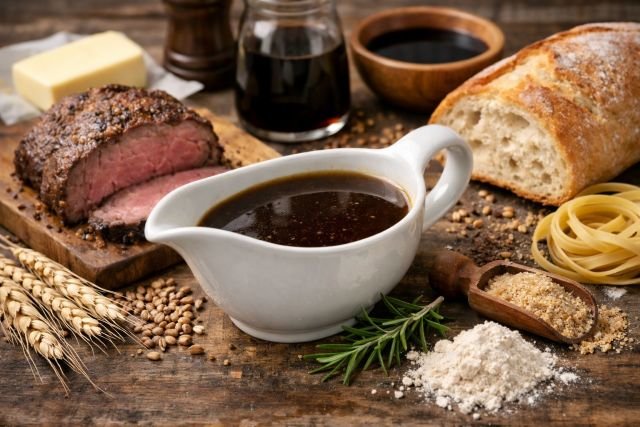
Many people following a gluten-free diet wonder: is au jus gluten free? The answer depends on how the sauce is made. Traditional au jus is often naturally gluten free, but many commercial recipes and restaurant versions contain hidden gluten ingredients.
- What Is Au Jus?
- Is Au Jus Gluten Free?
- Hidden Gluten Ingredients to Watch For
- How to Make Gluten-Free Au Jus at Home
- Gluten-Free Au Jus in Restaurants
- Gluten-Free Alternatives to Au Jus
- Health Benefits of Naturally Gluten-Free Au Jus
- How to Identify Gluten-Free Sauces
- Frequently Asked Questions
- Final Thoughts: Is Au Jus Gluten Free?
Au jus, meaning “with juice” in French, is a light sauce made from meat drippings and broth. In its pure form, it typically contains beef drippings, broth, and seasonings, which are naturally gluten free. However, many recipes and packaged mixes add flour, soy sauce, or thickening agents that may contain gluten.
For people with celiac disease or gluten sensitivity, even small amounts of gluten can cause health problems. According to the Celiac Disease Foundation, about 1 in 100 people worldwide have celiac disease and must avoid gluten completely.
Understanding the ingredients in au jus can help you enjoy your meals safely without compromising flavor.
What Is Au Jus?
Au jus is a classic French sauce traditionally served with roasted meats, especially prime rib, roast beef, and French dip sandwiches.
The sauce is made from the natural juices released by meat during cooking. These drippings are combined with broth or stock and lightly seasoned to create a flavorful dipping sauce.

Unlike gravy, traditional au jus is thin and broth-like, not thickened with flour or starch.
Traditional Au Jus Ingredients
Classic recipes usually contain:
- Beef drippings from roasted meat
- Beef broth or stock
- Salt and black pepper
- Garlic or herbs (optional)
When prepared this way, au jus is naturally gluten free.
However, many modern recipes alter the original formula, introducing ingredients that may contain gluten.
Is Au Jus Gluten Free?
The short answer: Au jus can be gluten free, but not always.
Authentic au jus made only from meat drippings and broth does not contain gluten. However, packaged mixes, restaurant sauces, and homemade gravies often include gluten-containing additives.
Some common gluten sources found in au jus include:
- Wheat flour used as a thickener
- Soy sauce containing wheat
- Malt flavoring
- Commercial broth with gluten additives
Because of these variations, it’s important to check ingredient labels carefully or ask how the sauce is prepared.
According to the FDA, foods labeled gluten free must contain less than 20 parts per million (ppm) of gluten, which is considered safe for most people with celiac disease.
Hidden Gluten Ingredients to Watch For
Even when a sauce appears simple, hidden gluten can still sneak in through certain ingredients. Understanding these sources is key to determining whether au jus is gluten free.
Flour-Based Thickeners
Some cooks add flour to au jus to make it thicker, turning it into a gravy-like consistency.
Common thickeners that contain gluten include:
- All-purpose flour
- Wheat flour
- Roux made from flour and butter
If flour is used, the sauce is no longer gluten free.
A safe alternative is cornstarch, arrowroot, or gluten-free flour blends.
Soy Sauce
Soy sauce is one of the most common hidden gluten ingredients.
Traditional soy sauce is brewed with wheat and soybeans, meaning it contains gluten. Many au jus recipes use soy sauce to enhance umami flavor.
If soy sauce is included, check whether it is:
- Regular soy sauce (contains gluten)
- Tamari or gluten-free soy sauce (safe alternative)
Gluten-free tamari offers the same savory depth without wheat.
Store-Bought Au Jus Mixes
Many packaged au jus mixes contain ingredients that include gluten.
Common additives found in mixes include:
- Hydrolyzed wheat protein
- Wheat starch
- Malt extract
- Modified food starch derived from wheat
For example, some instant au jus packets rely on flour-based thickeners to create a richer texture.
If you rely on mixes, always choose certified gluten-free brands.
Beef Broth and Stock
Surprisingly, even broth can contain gluten.
Some commercial broths include:
- Yeast extract containing barley
- Flavorings derived from wheat
- Thickening agents
Always check labels or use homemade broth to ensure safety.
How to Make Gluten-Free Au Jus at Home
The easiest way to guarantee that au jus is gluten free is to make it yourself.
A simple gluten-free au jus recipe uses only a few ingredients and takes minutes to prepare.
Simple Gluten-Free Au Jus Recipe
Ingredients:
- 2 cups beef broth (gluten free)
- ½ cup beef drippings
- 1 teaspoon garlic powder
- Salt and pepper to taste
Instructions:
- Heat beef drippings in a saucepan over medium heat.
- Add beef broth and garlic powder.
- Simmer for 5–10 minutes to develop flavor.
- Season with salt and pepper.
Because this recipe contains no flour or wheat-based ingredients, it is naturally gluten free.
If you prefer a slightly thicker texture, add cornstarch slurry instead of flour.
Gluten-Free Au Jus in Restaurants
Dining out can make gluten-free eating more complicated.
Many restaurants prepare au jus in large batches using commercial mixes or soy sauce, which may contain gluten.
If you are ordering dishes like prime rib or French dip sandwiches, ask the server these questions:
- Is the au jus thickened with flour?
- Does it contain soy sauce?
- Is it made from scratch or from a mix?
Restaurants that cater to gluten-free diets may offer dedicated gluten-free sauces.
The National Foundation for Celiac Awareness recommends asking about ingredients and cross-contamination when dining out.
Gluten-Free Alternatives to Au Jus
If you cannot confirm whether a sauce is gluten free, there are safe alternatives.
Some gluten-free sauce options include:
- Homemade beef broth dip
- Gluten-free gravy made with cornstarch
- Reduced beef stock with herbs
These substitutes provide similar flavor while ensuring safety.
Health Benefits of Naturally Gluten-Free Au Jus
When made traditionally, au jus offers several nutritional advantages.
Because it is a light sauce without flour or heavy fats, it contains fewer calories than many gravies.
Benefits include:
- Lower calorie content
- Rich beef flavor without added starch
- Naturally gluten free when made correctly
It also contains small amounts of protein and minerals from beef drippings.
For people following gluten-free diets, sauces like au jus can add flavor without compromising dietary restrictions.
How to Identify Gluten-Free Sauces
If you frequently cook gluten free, learning to identify safe sauces is helpful.
Look for these indicators:
- Certified gluten-free labeling
- No wheat, barley, or rye in ingredients
- Use of gluten-free thickeners
Many brands now produce gluten-free broths, sauces, and seasoning mixes to meet growing demand.
According to a Grand View Research report, the global gluten-free products market was valued at over $5 billion and continues to grow, reflecting increased awareness of gluten sensitivity.
Frequently Asked Questions
Is au jus gluten free in restaurants?
Not always. Some restaurants add flour or soy sauce to enhance flavor or thickness. Always ask about ingredients before ordering.
Is French dip au jus gluten free?
The au jus may be gluten free, but French dip sandwiches often use regular bread, which contains gluten. Choose gluten-free bread if available.
Are au jus packets gluten free?
Most packaged au jus mixes are not gluten free because they contain wheat flour or gluten-based flavorings. Look for certified gluten-free versions.
Can you thicken au jus without gluten?
Yes. Use cornstarch, arrowroot, or tapioca starch instead of flour.
Final Thoughts: Is Au Jus Gluten Free?
So, is au jus gluten free? In its traditional form, yes. Authentic au jus made from meat drippings, broth, and seasonings does not contain gluten.
However, many modern recipes, packaged mixes, and restaurant versions include hidden gluten ingredients such as flour, soy sauce, or wheat-based additives.