



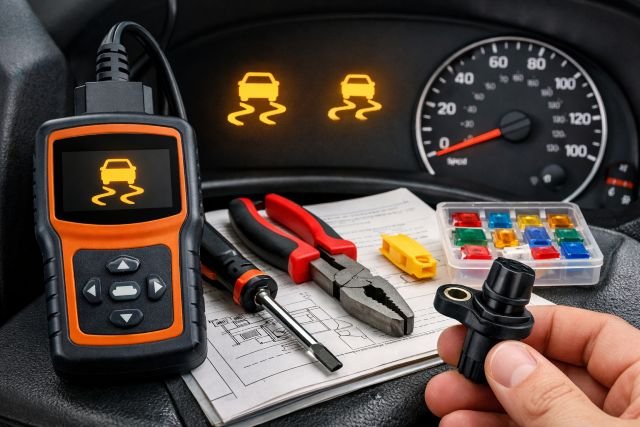
If you suddenly notice the traction control and Stabilitrak light on your dashboard, it can feel alarming. Many drivers assume the worst and head straight to the mechanic, expecting an expensive repair. However, in many cases, the issue may stem from something minor that you can diagnose — or even fix — yourself.
- What Does the Traction Control and Stabilitrak System Do?
- Why the Traction Control and Stabilitrak Light Comes On
- Simple Fixes When the Traction Control and Stabilitrak Light Is On
- Can You Drive With the Traction Control and Stabilitrak Light On?
- Real-World Example: A $20 Fix Instead of a $900 Repair
- When You Should See a Mechanic
- Preventing Stabilitrak and Traction Control Problems
- Frequently Asked Questions
- Conclusion
Modern vehicles rely heavily on electronic stability systems to maintain control and safety. When these systems detect a fault, warning lights appear to alert the driver. Understanding why the traction control and Stabilitrak light on message appears can help you respond quickly and potentially save hundreds of dollars in unnecessary repairs.
In this guide, we’ll explore what these warning lights mean, the most common causes, and several simple fixes that could restore your vehicle’s stability system without breaking the bank.
What Does the Traction Control and Stabilitrak System Do?
Traction control and Stabilitrak are key components of a vehicle’s electronic stability control (ESC) system. Their main goal is to prevent your car from losing traction during acceleration, braking, or cornering.
The traction control system (TCS) limits wheel spin when driving on slippery surfaces like rain, snow, or gravel. Meanwhile, Stabilitrak — a stability control technology commonly used in GM vehicles — helps keep the vehicle moving in the intended direction by adjusting braking and engine power.
According to the National Highway Traffic Safety Administration (NHTSA), electronic stability control systems reduce single-vehicle crashes by about 49% for passenger cars and 56% for SUVs.

Because these systems rely on sensors, software, and electronic modules, even a small fault can trigger a dashboard warning.
Why the Traction Control and Stabilitrak Light Comes On
Seeing the traction control and Stabilitrak light on usually means the system has detected a problem and temporarily disabled stability assistance.
Below are the most common causes drivers encounter.
Faulty Wheel Speed Sensors
Wheel speed sensors monitor how fast each wheel is rotating. If one wheel spins faster than the others, the traction control system intervenes.
However, these sensors can fail due to dirt buildup, corrosion, or wiring issues.
When a sensor sends incorrect data, the vehicle’s computer may disable traction control and Stabilitrak as a safety precaution.
Many mechanics report that wheel speed sensor failure is one of the most frequent causes of stability control warnings.
Bad Steering Angle Sensor
The steering angle sensor tracks the direction of the steering wheel.
If the sensor becomes misaligned or fails, the stability system cannot determine the intended path of the vehicle. This can cause the traction control and Stabilitrak light on warning to appear.
Sometimes the sensor simply needs recalibration rather than replacement.
Low Battery Voltage
Modern cars rely heavily on electrical systems. If your car battery is weak or voltage fluctuates, electronic systems like traction control may malfunction.
Low voltage can trigger several warning lights at once, including:
ABS light
Traction control light
Stabilitrak warning
Replacing or recharging the battery often resolves the issue.
Faulty ABS Module
The anti-lock braking system (ABS) works closely with traction control and stability systems.
If the ABS module fails or detects irregular signals, it may disable Stabilitrak to prevent incorrect braking responses.
This type of repair can be more expensive, but it is still less common than sensor-related problems.
Loose Gas Cap or Engine Fault
This one surprises many drivers.
Sometimes the traction control warning appears alongside the check engine light. This can happen if the engine management system detects a problem affecting vehicle performance.
A loose gas cap, faulty oxygen sensor, or engine misfire can indirectly trigger traction control warnings.
Simple Fixes When the Traction Control and Stabilitrak Light Is On
Before scheduling a costly repair, there are a few simple steps you can try.
These troubleshooting tips often resolve minor system glitches.
Restart the Vehicle
Modern vehicles contain dozens of interconnected modules.
Sometimes a temporary software glitch can cause warning lights to appear. Turning the car off and restarting it may reset the system.
If the warning disappears and doesn’t return, it may have been a temporary fault.
Check the Battery
A weak battery is a surprisingly common trigger.
Test your battery voltage using a multimeter. A healthy battery typically reads around 12.6 volts when the engine is off.
If the battery is below that level, charging or replacing it may fix the warning lights.
Inspect Wheel Sensors
Wheel sensors are located near the brake rotors.
Road debris, mud, or snow can sometimes cover the sensors and interfere with their signals.
Cleaning the area carefully can restore proper sensor readings.
Tighten the Gas Cap
It sounds simple, but it works more often than people think.
A loose gas cap can cause emissions system errors that cascade into other warnings.
Remove the gas cap, tighten it until it clicks, and drive for a few miles to see if the warning clears.
Scan the Vehicle for Error Codes
Using an OBD-II scanner is one of the best ways to identify the real issue.
These scanners read diagnostic trouble codes stored in your car’s computer. Many auto parts stores offer free scanning services.
Common codes related to traction control include:
C0035 – wheel speed sensor fault
C0455 – steering angle sensor issue
C0561 – system disabled information stored
Knowing the exact code prevents unnecessary repairs.
You can learn more about diagnostic codes from trusted resources like
Can You Drive With the Traction Control and Stabilitrak Light On?
Technically, yes — but it’s not ideal.
When the traction control and Stabilitrak light on warning appears, the stability system may be disabled.
This means your vehicle will behave like an older car without electronic stability assistance.
Driving in dry conditions may still be safe, but the risks increase in:
Rain
Snow
Ice
Sharp turns
The Insurance Institute for Highway Safety (IIHS) notes that electronic stability control is one of the most effective crash-prevention technologies available.
Ignoring the warning could increase the chance of losing control in slippery conditions.
Real-World Example: A $20 Fix Instead of a $900 Repair
Consider a common scenario.
A driver notices the traction control and Stabilitrak light on warning after driving through heavy rain. Concerned, they visit a dealership and are quoted nearly $900 for a sensor replacement.
Instead, the driver checks the wheel sensors and discovers one covered in mud. After cleaning it, the warning light disappears completely.
Situations like this highlight why diagnosing the issue before replacing parts can save significant money.
When You Should See a Mechanic
While some issues are easy to fix, others require professional inspection.
You should visit a mechanic if:
The warning light stays on continuously
Multiple warning lights appear together
The vehicle loses power while driving
Brakes behave abnormally
The car pulls to one side during braking
Certified technicians can run advanced diagnostics and test the stability system properly.
Preventing Stabilitrak and Traction Control Problems
Regular vehicle maintenance reduces the chances of system failures.
Keeping sensors clean, maintaining the battery, and addressing warning lights early can prevent larger repairs later.
Routine inspections of braking components and electrical connections also help maintain reliable stability control performance.
Many manufacturers recommend inspecting stability system components during routine brake service.
Frequently Asked Questions
What does it mean when traction control and Stabilitrak lights come on together?
It usually indicates the stability control system has detected a fault and temporarily disabled traction assistance. The issue may involve sensors, battery voltage, or the ABS system.
How much does it cost to fix Stabilitrak issues?
Repair costs vary depending on the problem.
Minor fixes like sensor cleaning may cost nothing, while replacing sensors or modules can range from $100 to $1,000.
Will disconnecting the battery reset Stabilitrak?
Disconnecting the battery may reset temporary errors. However, if a hardware fault exists, the warning light will return after driving.
Is Stabilitrak the same as traction control?
Not exactly.
Traction control prevents wheel spin during acceleration, while Stabilitrak focuses on maintaining directional stability during turns and sudden maneuvers.
Both systems work together to improve vehicle safety.
Conclusion
Seeing the traction control and Stabilitrak light on dashboard warning can be stressful, but it doesn’t always mean a costly repair is coming. In many cases, the issue is related to simple factors like dirty wheel sensors, low battery voltage, or minor system glitches.
By understanding how these systems work and performing a few basic checks, drivers can often diagnose the problem quickly and avoid unnecessary repair bills.
However, if the warning persists or affects vehicle handling, professional diagnostics are essential to ensure your safety.