


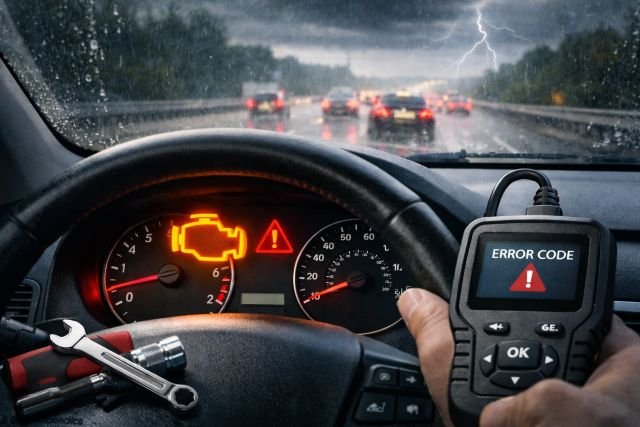
A flashing dashboard light can be alarming, especially when you’re driving. If you’re asking “why is my check engine light flashing”, it usually signals a serious problem that requires immediate attention. Unlike a steady check engine light, a flashing check engine light typically indicates a severe engine misfire that could damage your catalytic converter or other components.
- What Does a Flashing Check Engine Light Mean?
- Why Is My Check Engine Light Flashing While Driving?
- Warning Signs That Require Immediate Attention
- What To Do If Your Check Engine Light Is Flashing
- Quick Fixes That May Solve the Problem
- When Should You Stop Driving Immediately?
- How Mechanics Diagnose a Flashing Check Engine Light
- Preventing Future Check Engine Light Problems
- Frequently Asked Questions
- Conclusion
Understanding what this warning means, what causes it, and what you should do next can help prevent expensive repairs and keep your vehicle running safely.
What Does a Flashing Check Engine Light Mean?
A flashing check engine light is one of the most urgent warnings your vehicle can display. It generally indicates that your engine is misfiring. This means the fuel in one or more cylinders is not burning properly.
When this happens, unburned fuel can enter the exhaust system and overheat the catalytic converter. According to the U.S. Environmental Protection Agency (EPA), catalytic converters can reach temperatures above 1,600°F (871°C), making them vulnerable to severe damage if misfires continue.
If your check engine light is flashing while driving, it is best to reduce speed and address the issue immediately.
Why Is My Check Engine Light Flashing While Driving?
There are several possible reasons why your check engine light is flashing while driving. Some problems are relatively simple, while others may require professional repairs.
More Read

Engine Misfire
The most common cause of a flashing check engine light is an engine misfire.
A misfire occurs when the combustion process fails in one or more cylinders. This may happen because of worn spark plugs, faulty ignition coils, or problems with the fuel system.
When the engine misfires repeatedly, it sends a signal to the onboard diagnostic system (OBD-II), which triggers the flashing light to warn the driver of potential damage.
Faulty Spark Plugs or Ignition Coils
Spark plugs ignite the air-fuel mixture inside the cylinders. If they are worn or damaged, combustion becomes inconsistent.
Similarly, failing ignition coils may not deliver enough voltage to the spark plugs. The result is incomplete combustion and a flashing check engine light.
According to Car Care Council, worn spark plugs can reduce fuel efficiency by as much as 30% and cause misfires.
Fuel System Issues
Problems in the fuel system can also trigger this warning.
Examples include clogged fuel injectors, failing fuel pumps, or contaminated fuel. When the engine does not receive the proper fuel mixture, combustion becomes unstable.
This often results in poor acceleration, rough idling, and the flashing engine light.
Catalytic Converter Problems
A failing catalytic converter can also cause the check engine light to flash.
The catalytic converter reduces harmful emissions by converting toxic gases into less harmful ones. If it overheats due to unburned fuel, it may trigger the warning light.
Replacing a catalytic converter can cost $900–$2,500 depending on the vehicle, according to repair estimates from RepairPal.
Oxygen Sensor Failure
Oxygen sensors monitor the amount of oxygen in the exhaust system.
When these sensors fail, the engine may run too rich or too lean. This disrupts the combustion process and can eventually cause misfires.
In some cases, the check engine light may flash before staying permanently illuminated.
Loose or Damaged Wiring
Modern vehicles rely heavily on electronic sensors and wiring.
Damaged wires, loose connections, or corroded connectors can send incorrect signals to the engine control unit (ECU). The system may interpret these faults as engine misfires, causing the warning light to flash.
Warning Signs That Require Immediate Attention
If your check engine light is flashing while driving, you may also notice additional symptoms that indicate a serious issue.
These warning signs should never be ignored because they often signal ongoing engine damage.
Rough Engine Performance
A misfiring engine often feels rough or shaky. You may notice the car vibrating when idling or accelerating.
Loss of Power
Drivers frequently report reduced engine power or slow acceleration. This happens when cylinders fail to fire properly.
Burning Smell
If unburned fuel enters the exhaust system, it can create a strong burning smell. This may indicate that the catalytic converter is overheating.
Loud Engine Noise
Misfires can cause popping or knocking sounds from the engine or exhaust system.
If you experience these symptoms together with a flashing engine light, it is best to stop driving as soon as it is safe.
What To Do If Your Check Engine Light Is Flashing
When drivers see this warning, they often wonder whether they can continue driving.
In most cases, driving with a flashing check engine light is not recommended.
Instead, take the following steps to protect your vehicle.
Reduce Speed Immediately
Slow down and avoid heavy acceleration. Lower engine load may reduce the risk of further damage.
Avoid Long Trips
If possible, drive only a short distance to a safe location or repair shop.
Check for Obvious Issues
Sometimes the problem may be something simple like a loose gas cap or disconnected wire.
Scan the Diagnostic Codes
Most auto parts stores offer free OBD-II scans. These codes help identify the cause of the flashing check engine light.
Quick Fixes That May Solve the Problem
In some cases, the issue behind a flashing engine light can be resolved quickly.
Replace Worn Spark Plugs
Spark plugs should typically be replaced every 30,000–100,000 miles, depending on the vehicle and plug type.
Inspect Ignition Coils
Faulty ignition coils are a common cause of engine misfires. Replacing them can restore proper combustion.
Clean Fuel Injectors
Fuel injector cleaners can help remove carbon deposits that disrupt fuel flow.
Tighten the Gas Cap
A loose gas cap may trigger engine warnings in some vehicles. Tightening it properly can sometimes resolve the issue after a few drive cycles.
When Should You Stop Driving Immediately?
Some situations require immediate action.
If your check engine light flashes continuously, accompanied by strong vibrations, smoke, or burning smells, you should pull over and shut off the engine.
Continuing to drive may lead to severe engine damage or catalytic converter failure.
Professional inspection is recommended before driving again.
How Mechanics Diagnose a Flashing Check Engine Light
Professional technicians typically follow a diagnostic process.
First, they connect an OBD-II scanner to retrieve diagnostic trouble codes. These codes point to the affected system, such as ignition, fuel, or emissions.
Next, they perform visual inspections, check spark plugs and coils, and test fuel system pressure.
Finally, advanced diagnostics such as compression tests or sensor analysis may be used to pinpoint the exact cause.
Preventing Future Check Engine Light Problems
Regular maintenance plays a major role in preventing engine issues.
Keeping up with routine servicing reduces the likelihood of misfires and engine damage.
Follow Scheduled Maintenance
Always follow the manufacturer’s recommended service intervals for spark plugs, filters, and fluids.
Use Quality Fuel
Low-quality fuel can create carbon deposits and clog fuel injectors.
Replace Air Filters Regularly
A clean air filter ensures the engine receives the proper air-fuel mixture.
Address Warning Signs Early
If you notice rough idling or poor fuel efficiency, have the vehicle inspected before the issue becomes severe.
Frequently Asked Questions
Can I drive with a flashing check engine light?
Driving with a flashing check engine light is risky because it usually indicates a severe engine misfire. It is best to reduce speed and seek repairs immediately.
Is a flashing check engine light serious?
Yes. A flashing light typically signals a problem that can damage your catalytic converter or engine if ignored.
What is the most common reason for a flashing check engine light?
Engine misfires caused by worn spark plugs or faulty ignition coils are among the most common causes.
How expensive is it to fix?
Costs vary depending on the problem. Spark plug replacements may cost $100–$300, while catalytic converter replacement can exceed $2,000.
Conclusion
If you are wondering “why is my check engine light flashing”, the answer usually involves a serious issue such as an engine misfire, ignition failure, or fuel system problem. Unlike a steady warning light, a flashing check engine light while driving should never be ignored.
Reducing speed, checking for obvious issues, and seeking professional diagnostics can prevent further damage and costly repairs. By maintaining your vehicle regularly and addressing problems early, you can avoid major engine issues and keep your car running safely.